
Togbui Kporli Asafo calls for adoption of Ewe numeracy in basic school curriculum
Education
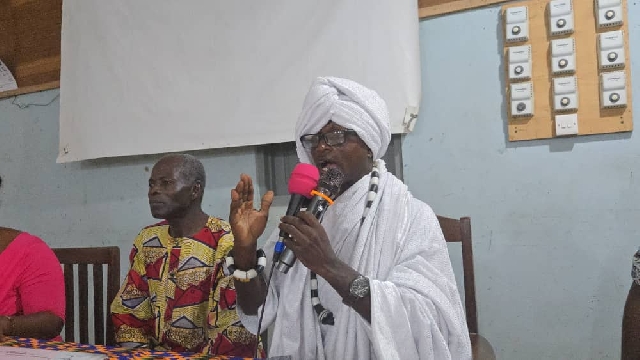 Executive Director and traditional anthropologist Togbui Kporli Asafo,
Executive Director and traditional anthropologist Togbui Kporli Asafo has called for the integration of Ewe numeracy into Ghana’s basic school curriculum to enhance learning among pupils in Ewe-speaking communities.
He asserted that children understand concepts better when taught in their mother tongue, especially during their foundational years.
Addressing the media at a press conference in Ho, Togbui Asafo explained that introducing Ewe numeracy at the basic level would not only improve comprehension but also strengthen cultural identity among young learners.
According to him, many pupils struggled with abstract numerical concepts because they were introduced only through a second language.
He emphasised that the Ewe language is spoken across several West African countries, including Ghana, Togo and Benin, making it important for the language to have its own standardised approach to teaching and writing numerals. Developing such a system, he noted, would enable children to read, write and count confidently in their native language.
Togbui Asafo further revealed that he had already produced educational materials designed to support the teaching of Ewe numeracy in schools. These materials, he said, aim to complement existing teaching methods while giving learners a culturally grounded and relatable foundation in mathematics.
To advance the initiative, he disclosed that he is currently engaging key state institutions, including the National Council for Curriculum and Assessment (NaCCA), the Ministry of Education and the Ministry of Tourism, Arts and Culture. His goal is to have his books officially approved and incorporated into the national curriculum.
He expressed optimism that Ghana’s educational system would increasingly embrace indigenous knowledge and linguistic diversity, stressing that mother-tongue instruction remains one of the most effective tools for improving literacy and numeracy among young learners.


Trending News
A/R:Eric Opoku breaks ground for construction of SCANT
18:05
Vice President opens new sanitary pad production line at Software Manufacturing
06:57
GSFP monitoring team assesses progress at Peduase and Ayi Mensah schools
15:43
Minority spars with Majority over passage of contentious Okada Bill
03:02
Bawku: President Mahama anticipates Asantehene's comprehensive, actionable report and roadmap to lasting peace
17:34
Tse-Addo lands: Presidency petitioned over alleged actions of Interior Minister
16:19
President Mahama calls on ECOWAS to commit to dialogue and engagement with Sahel States
18:48
Kwame Danso district court shut down following violent incidents – CJ directs
15:33
Okada legalised in Ghana as Parliament passes bill
19:26
Parliament has collapsed; no law is functioning —Michael Okyere Baafi claims
17:26