

MFWA’s Sulemana Braimah calls for action beyond media exposés
News
 The media
The Executive Director of the Media Foundation for West Africa (MFWA), Sulemana Braimah, has called for stronger institutional responses to media investigations, arguing that exposing wrongdoing is only meaningful when it leads to corrective action.
He said media reports on abandoned projects, poor access to safe drinking water and alleged corruption often attract public attention but fail to produce lasting solutions.
He observed that although such reports sometimes provoke public outrage and responses from officials, the underlying problems often persist long after public attention has shifted elsewhere.
“Some of these stories generate considerable public outrage. They dominate public discussion and sometimes provoke responses from public officials. But after a few days, the headlines disappear, the outrage subsides, and quite often, the problems remain,” he said.
The Executive Director stressed that journalism should be recognised not only for its watchdog role but also for the evidence it provides to help public institutions identify policy failures and improve decision-making.
He explained that investigative reports examining procurement records or exposing discrepancies between official project records and conditions on the ground could help authorities identify failures and take corrective measures.
“The aim is not to embarrass government, but to help government to do better, and to help public institutions to do better,” he stated.
He added that credible media investigations could strengthen parliamentary oversight, government accountability processes and the work of regulatory institutions.
The MFWA Executive Director cautioned that publishing investigative findings alone does not guarantee accountability, calling for closer engagements between journalists, public institutions and civil society organisations.
“We must therefore ensure that credible media evidence does not become something stranded between exposure and inaction.”
Sulemana Braimah made these remarks while addressing a gathering at a Media and Stakeholders Accountability Forum held under the theme “Leveraging Public Media Evidence to Strengthen Public Policy and Accountability” on October 21.
Sulemana Braimah also urged journalists to ensure their reports are credible, properly verified and fairly presented, while encouraging public institutions to view credible investigations as opportunities to correct mistakes rather than acts of hostility.
Addressing individuals who defend wrongdoing because of political party loyalty, he emphasised that governments should not view critical journalism as a threat.
“A government does not become weaker because journalists expose problems under its watch. Indeed, governance becomes weaker when those problems are ignored or allowed to continue,” he emphasised.
He expressed hope that the forum would identify practical ways to ensure media evidence informs public policy and leads to meaningful institutional responses.
Source Portia Eyram Gbokpui


Trending News

NPP A/R Women Organizer lends psychological and legal help to Obuasi SHTS sex abuse victims
19:01
Obuasi SHTS Sexual Abuse: Every child deserves to learn in a safe environment - Child Rights International
13:57
Govt pays over 50000 teachers all salaries and arrears from Jan 1 this year
15:47
7 missing Ghanaian fishermen rescued in Benin territorial waters
16:58
GPCL introduces online system to tackle fake gazettes
02:40
Bawumia engages artisans; advocates access to credit, solar power, training and certification to address their challenges
12:17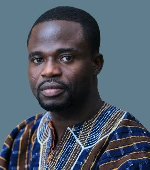
Obuasi SHTS headmaster sues Manasseh Azure, Multimedia Group over sexual abuse reports
16:51
Water crisis over in Dodowraso as Abirem MP commissions borehole
02:32
NDC’s Greater Accra 2028 election ambition rests on Danso’s mobilisation skills – Kpone-Katamanso Chairman says
11:42
Galamsey Fight: NAIMOS conducts 738 operations, destroys 1,970 changfan machines in 3 months
17:47